ADHD describes ongoing differences in directing attention, managing impulses, and regulating activity. In daily life, that can affect starting, switching, remembering, planning, and finishing. It does not mean someone is lazy or does not care.
The Short Answer
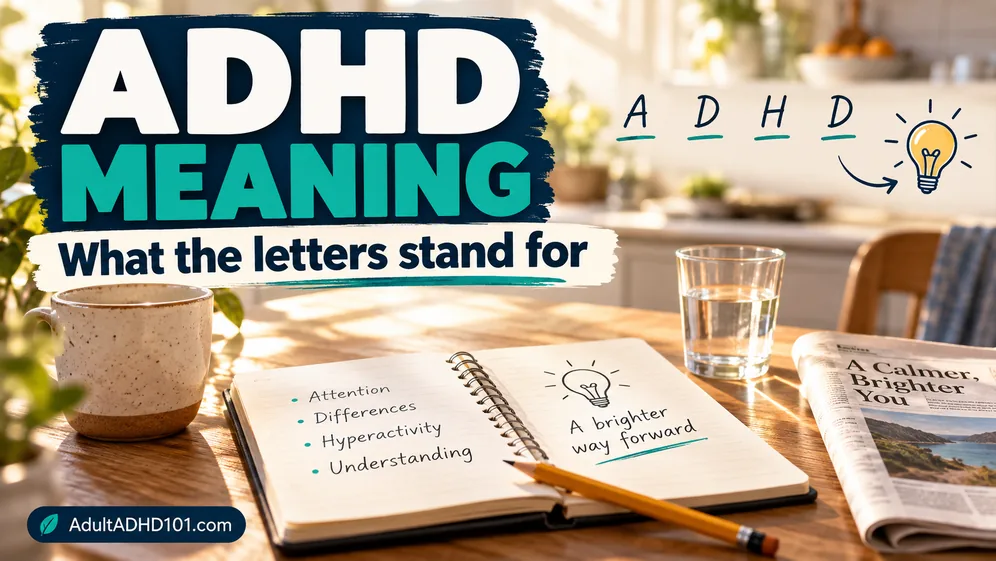
ADHD is the short form of attention-deficit/hyperactivity disorder. The formal words name broad patterns. They do not describe every person, setting, or day.
The everyday meaning is easier to see in actions. You may know what needs doing but cannot find the starting point. You may focus deeply, then struggle to switch when the next task arrives.
ADHD is about regulation, not a total lack of attention. Attention may follow interest, urgency, novelty, or clear structure more easily than importance alone.
THE USEFUL QUESTION
Instead of asking whether attention exists, ask what helps direct it. Visibility, interest, urgency, and a clear first move can change the task.
For the letters and older ADD wording, read the ADHD full form guide. The ADHD basics hub maps the wider topic.
What It Describes in Everyday Life
A plan can feel clear while it is in front of you. After an interruption, the same plan may disappear from working view. Returning takes more than remembering that the task exists.
Starting can also be difficult when work is vague. “Sort the house” offers no clear doorway. “Put the post beside the recycling” gives your hands somewhere to begin.
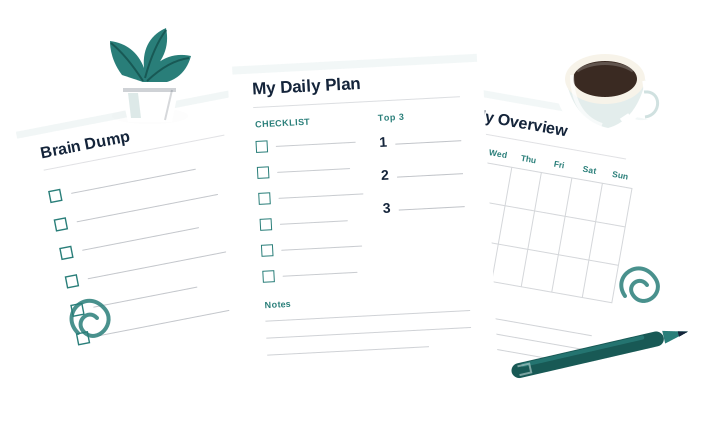
External cues can carry part of the mental load. A visible list, prepared workspace, calendar block, or written restart note keeps the plan available.
 Attention may be hard to aim or shift.
- Several steps may be hard to hold together.
- Time may not feel urgent until it is close.
Want the short version? The 7-Day ADHD Reset Kit
Seven days, one small step each day. A printable PDF kit for adults who want their week to feel less like a fight.
PRINTABLE PDF KIT · LIMITED TIME OFFER
What It Does Not Mean
ADHD does not mean someone lacks intelligence, discipline, ambition, or care. A missed reply can matter deeply to the person who forgot it. An unfinished task can remain mentally heavy.
It also does not mean attention never works. A compelling task may hold attention so fully that other needs fade. A dull task may feel almost impossible to enter.
Uneven performance is not the same as indifference. The gap between intention and action can confuse both the person and everyone around them.
- It is not a character flaw.
- It is not constant visible energy.
- It is not explained by one difficult day.
How It Differs From Being Busy or Forgetful
Everyone has distracted or forgetful moments. A crowded week can make those moments more common. Stress and interruptions can also make attention less steady.
The term ADHD describes a broader, ongoing pattern across daily life. This page cannot sort personal experiences into a label. A qualified professional is the right source for individual questions.
You can still improve the environment without deciding what a moment means. Put reminders where action happens. Reduce hidden steps. Keep fewer active priorities in view.
Attention Regulation, Not Simple Distraction
Distraction is only one part of the picture. Switching away can also be hard. You might remain with an interesting problem while meals, messages, or the next appointment slip from view.
Regulation includes starting, staying, shifting, and stopping. It also includes choosing what deserves focus now. The challenge can sit at any point in that sequence.
The ADHD focus hub covers practical ways to shape attention. The executive function guide explains planning, memory, and follow-through.
Where to Read Next
Choose the page that matches your question. Read adult ADHD for work, home, money, and time. Read types of ADHD for the main descriptive terms.
For practical changes, start with one repeated difficulty. The routines hub helps with daily anchors. The productivity hub helps turn plans into visible actions.
You do not need to solve every area at once. Pick one point where the plan keeps breaking. Make that step easier to see, begin, or resume.
Sources for the general information on this page: CDC (cdc.gov), NIH/NIMH (nimh.nih.gov), Mayo Clinic (mayoclinic.org). Educational information only, not medical advice.