Build routines around things that already happen. Use a clear trigger, make the action small, and decide how you will restart. The best routine is easy to see and easy to resume.
Build around anchors, not clock times
A clock time asks you to notice the clock. An anchor is an event that already happens. The kettle clicks off. You brush your teeth. You lock the front door.
Attach a small action to that event. Put your notebook beside the kettle. Place your keys on top of the bag you need. The anchor becomes a reminder you can see.
 Choose an anchor that rarely moves.
- Keep the new action in the same place.
- Make the action small enough for a crowded day.
This works better than building a full schedule at once. If attention slips, the next anchor gives you another place to begin. For more ways to make tasks visible, visit ADHD focus.
Habits need a trigger, not willpower
The trigger
A useful trigger is specific. “After lunch” is clearer than “later.” Keep one trigger, one action and one place together. When the trigger happens, the choice is already made.
The size
Make the starting version almost plain. Open the document. Put one plate away. Write the next task. You can continue, but the routine only asks for the start.
Keep the cue close to the action. A note on a closed laptop may vanish when work begins. A note beside the exact file or tool stays connected to what you need to do.
If the habit needs several supplies, gather them before the trigger arrives. Reduce setup before asking for effort. Fewer searches mean fewer chances for the routine to drift.
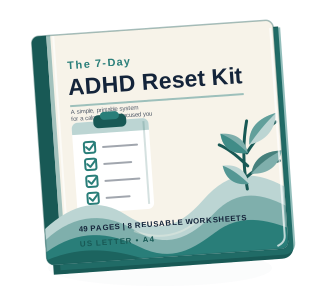
Want the short version? The 7-Day ADHD Reset Kit
Seven days, one small step each day. A printable PDF kit for adults who want their week to feel less like a fight.
PRINTABLE PDF KIT · LIMITED TIME OFFER
Miss once, then make the next return easy
A missed day is information, not a verdict. Ask what blocked the action. The trigger may have moved. The step may have been too large. The tool may have been out of sight.
Measure the routine by the return. Put the needed item back in place. Write the smallest next action. Then use the next normal anchor instead of waiting for a fresh week.
RESTART RULE
Do not repair the whole plan. Restore the next visible step. A calm restart protects the routine from an all-or-nothing response. Read more practical reset ideas in ADHD emotions and mindset.
Set up the evening and keep mornings boring
Morning choices get harder when everything is hidden. Before you finish the day, put out what tomorrow needs. Leave clothes together. Put the bag by the door. Write the first action on paper.
- Clear the landing spot. Give keys, bags and papers one visible home.
- Write the opening move. Name the first physical action, not the whole project.
- Stop adding choices. Use the same simple order until it feels familiar.
Boring is useful here. Novelty can make planning fun, but repetition keeps the plan available on a low-energy day. Change a routine only when a part truly fails.
If your plan keeps growing, use a smaller system from ADHD productivity. You can also try the flexible guide to a morning routine that survives Monday.
Review the routine when it creates more work than it removes. Take out steps before adding tools. Keep the part that helps you begin, and drop the part you only maintain because it looked useful on paper. A routine should carry decisions for you.
Sources for the general information on this page: CDC (cdc.gov), NIH/NIMH (nimh.nih.gov), Mayo Clinic (mayoclinic.org). Educational information only, not medical advice.