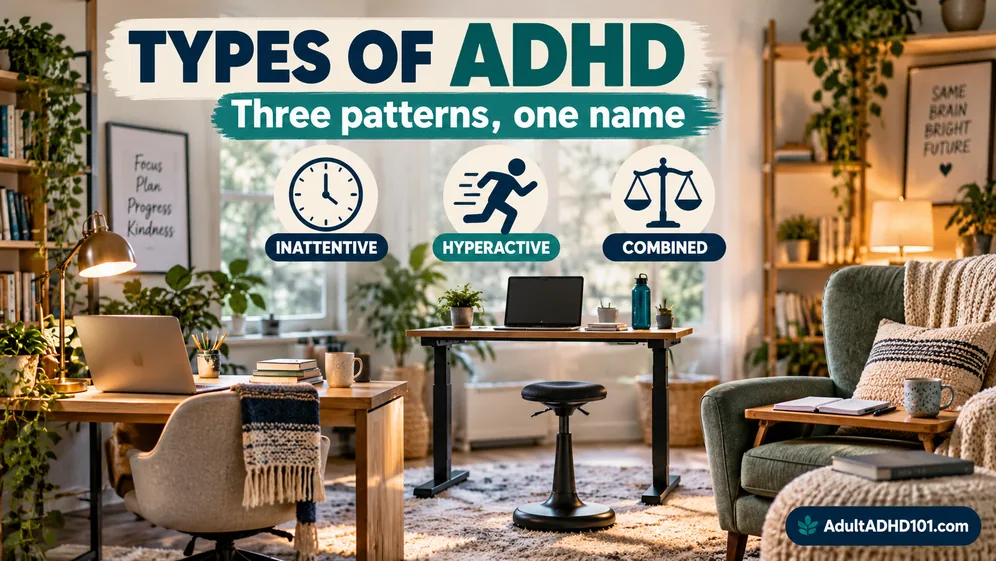
The main ADHD descriptions are inattentive, hyperactive-impulsive, and combined. They name the broad pattern that stands out at a given time. They are not personality types or a quiz result.
The Types of ADHD in Plain English
The terms sort a wide range of experiences into broad groups. One group centers on directing attention and holding a plan. Another centers on movement, restlessness, and acting quickly. Combined brings both groups together.
These words describe patterns, not people. Someone may be quiet, lively, careful, creative, reserved, or outgoing under any description. The label does not predict character.
| Term | Plain-English focus |
|---|---|
| Inattentive | Directing attention, holding details, and following a plan |
| Hyperactive-impulsive | Movement, inner restlessness, pausing, and waiting |
| Combined | A mix across both broad groups |
Sources describe the mix of these types differently. There is no useful reason to rank them here. The meaning of each term matters more than which appears most often.
Start with the ADHD basics hub if the wider language feels unfamiliar.
Inattentive
Inattentive describes a pattern where attention and organization stand out. A person may lose track of instructions, overlook details, or struggle to return after an interruption.
This does not mean attention is absent. An interesting task may hold focus for a long stretch. A routine task may be much harder to enter. Attention can depend heavily on context and interest.
 A plan may fade when it is no longer visible.
- Several spoken steps may be hard to hold at once.
- Quiet distraction may go unnoticed by other people.
The older term ADD is often linked with this description. The ADHD full form guide explains why that older language remains common.
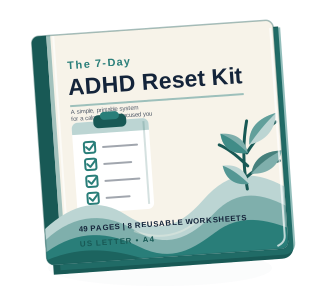
Want the short version? The 7-Day ADHD Reset Kit
Seven days, one small step each day. A printable PDF kit for adults who want their week to feel less like a fight.
PRINTABLE PDF KIT · LIMITED TIME OFFER
Hyperactive-Impulsive
Hyperactive-impulsive describes patterns involving movement, restlessness, and quick action. The movement may be visible. It can also feel like internal pressure to move, speak, switch, or decide.
Impulsive does not mean thoughtless as a personality. It points to a short gap between an urge and an action. Waiting, slowing a response, or leaving a thought unsaid may take effort.
Adult restlessness may look subtle. It can appear as constant task switching, tapping, pacing during calls, or filling every quiet moment. The setting changes what other people notice.
KEEP IT DESCRIPTIVE
These examples explain the word. They are not a checklist. Personal questions belong with a qualified professional.
Combined
Combined describes a mix of inattentive and hyperactive-impulsive patterns. It does not mean two separate conditions are stacked together. It also does not mean a person is more difficult or less capable.
Daily life may include losing the thread of a task and feeling driven to switch. A person might speak quickly in one setting yet seem quiet in another. Mixed patterns can still change with context.
Some sources call combined the most common description. Others report a different order. Because the sources disagree, this page does not claim that any type is most common.
What the Types Look Like in Daily Life
At work, inattentive patterns may affect long instructions or distant deadlines. Hyperactive-impulsive patterns may affect waiting in meetings or pausing before a reply. Combined patterns may include both kinds of friction.
At home, the same words can describe forgotten steps, unfinished routines, quick purchases, or frequent switching. None of these moments belongs to only one type.
Practical support often starts with the task, not the label. A written next step can help when a plan disappears. A pause before sending can help when action arrives too quickly.
For real-world examples, read about adult ADHD, ADHD at work, or executive function.
Why the Label Can Change Over Time
The pattern that stands out can change as life changes. A structured setting may support attention. A busy role may expose planning strain. Restlessness may become less visible while still feeling present.
That is why these terms are descriptions rather than fixed identities. A changed label does not rewrite the person. It reflects what is most noticeable within the current framework.
A label can help people use shared language. It cannot explain every strength, challenge, setting, or day. For the broader meaning, visit what ADHD means.
Sources for the general information on this page: CDC (cdc.gov), NIH/NIMH (nimh.nih.gov), Mayo Clinic (mayoclinic.org). Educational information only, not medical advice.