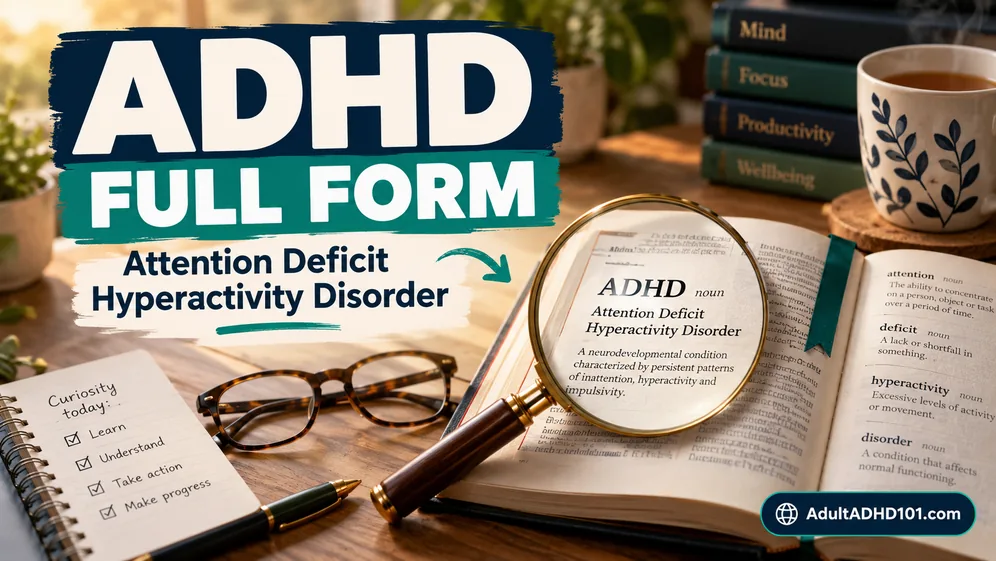
ADHD stands for attention-deficit/hyperactivity disorder. The name points to patterns involving attention, activity, and quick actions. It does not capture every daily experience.
What ADHD Stands For
The full term uses attention, deficit, hyperactivity, and disorder. A slash often sits between deficit and hyperactivity. In ordinary writing, people usually use only the short form.
The name is a label, not a full description. It groups several broad patterns under one term. Those patterns can affect starting, planning, remembering, pausing, and finishing.
 Attention can mean directing and shifting focus.
- Hyperactivity can include outward movement or inner restlessness.
- Disorder is part of the formal name used by professionals.
For a wider plain-English introduction, visit the ADHD basics hub. It connects this name with practical guides across the site.
Where the Name Comes From
The name was built to describe a shared set of attention and activity patterns. It became the common umbrella term used in public information. That is why ADHD appears on websites, forms, books, and workplace documents.
The wording focuses on what others may notice. It can sound like attention is missing. It can also suggest constant visible movement. Real life is usually less tidy than the label.
PLAIN ENGLISH
Think of ADHD as the accepted name for a broad pattern. The letters tell you the category. They do not tell you one person's whole story.
Want the short version? The 7-Day ADHD Reset Kit
Seven days, one small step each day. A printable PDF kit for adults who want their week to feel less like a fight.
PRINTABLE PDF KIT · LIMITED TIME OFFER
Why ADD Is Still Used
You may still hear ADD in conversation. People often use it when talking about attention problems without obvious physical restlessness. The shorter term can also linger because someone learned it years ago.
Today, ADHD is the broader formal name. ADD is an older label rather than a separate everyday category. Both terms often point toward the same wider subject. The wording has changed more than many conversations have.
If someone says ADD, you do not need to correct the whole conversation. You can ask what they mean. Clear examples are often more useful than debating initials.
What the Words Get Wrong
“Deficit” can sound like a person has no attention. Yet attention may be intense for an engaging task and hard to direct elsewhere. The issue is not simply having too little focus.
“Hyperactivity” can sound like nonstop running. Adults may instead describe a busy mind, frequent switching, talking quickly, or difficulty settling. Some people do not connect with that word at all.
The label can hide changes across settings. A quiet room, clear deadline, or interesting problem may make focus easier. An unclear task can make the same person feel stuck.
- The name does not mean a lack of effort.
- It does not mean attention always works the same way.
- It does not describe every person's daily life.
ADHD vs ADD in Plain English
ADHD is the current umbrella term. ADD is older language that remains familiar. They are not competing ideas you must choose between. Context usually makes the intended meaning clear.
You might see more specific descriptive words beside ADHD. These explain which broad pattern is being discussed. The types of ADHD guide explains those words without turning them into a checklist.
If you want the meaning behind the initials, read what ADHD means in daily life. For an adult-life view, explore adult ADHD.
Using the Term Clearly
Spell out the full form the first time in formal writing. After that, ADHD is clear and easier to read. In conversation, use the term that helps everyone understand the topic.
Examples make labels more useful. Instead of saying attention is bad, name the moment. Starting an unclear email, returning to a task, or holding several steps in mind says more.
The initials offer a starting point. Practical pages about focus, executive function, and routines explain common daily challenges in more useful detail.
Sources for the general information on this page: CDC (cdc.gov), NIH/NIMH (nimh.nih.gov), Mayo Clinic (mayoclinic.org). Educational information only, not medical advice.