When focus slips, make the next action visible, remove nearby choices, and work toward a clear stopping point. Do not chase the lost hour. Build a smaller place to restart.
Notice what pulls focus away
Focus often gets harder when a task feels dull, distant, or private. There may be no clear reward, no deadline you can feel, and no person waiting for the result. The task stays important but loses its grip.
Instead of judging the drift, name the missing condition. Does the work need a visible finish? Does it need company? Does it need a reason that matters today? Name the weak link before adding another tool.
 Give dull work a clear before-and-after result.
- Move a distant deadline into today's written plan.
- Tell someone what you plan to finish before you begin.
This is not about forcing perfect attention. It is about making the task easier to hold. The executive function hub explains why planning and starting can feel separate.
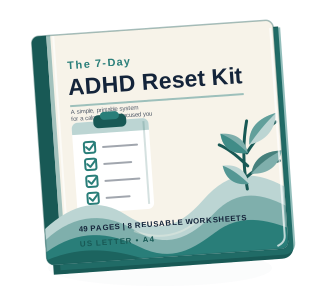
Want the short version? The 7-Day ADHD Reset Kit
Seven days, one small step each day. A printable PDF kit for adults who want their week to feel less like a fight.
PRINTABLE PDF KIT · LIMITED TIME OFFER
Make starting physical
“Work on report” is a label, not an action. Your hands cannot work on a label. They can open the file, paste the notes, and type a rough heading. The first move must be visible.
Write that move beside the task. Make it small enough to do without another decision. Once your hands are moving, you can choose the next action from a better place.
- Open the workspace. Bring only the needed page or file into view.
- Write the first action. Use a verb that describes a physical move.
- Begin before sorting. Improve the plan after the task has started.
If the doorway still feels too large, try the two-minute rule. It turns starting into a contained action instead of a promise to finish.
Make the room do some work
Your space keeps offering choices. Every open tab, visible object, and nearby phone can become the next task. Reduce the number of invitations before you ask yourself to concentrate.
Keep a single surface for current work. Put the needed item within reach. Put competing items farther away. Leave tomorrow's first file or notebook ready before you finish today.
RESET THE SCENE
When attention scatters, clear the surface and restore only the current task. A short physical reset can be easier than an argument with yourself.
Your room does not need to look minimal. It needs to make the next choice obvious. Build that reset into your ADHD routines so it does not rely on memory.
Want the short version? The 7-Day ADHD Reset Kit
Seven days, one small step each day. A printable PDF kit for adults who want their week to feel less like a fight.
PRINTABLE PDF KIT · LIMITED TIME OFFER
Use blocks you can finish
A work block should fit the step in front of you. “Finish the draft” may be too vague. “Write the opening” gives the block an end you can see.
Stop when the step ends. Before leaving, write the next block's first move. That note protects your return from another round of planning.
A BLOCK HAS AN EDGE
Choose a result you can point to: a sent message, a cleared surface, or a drafted section. The result matters more than watching a timer.
For a day built around these smaller units, see ADHD productivity. For a paper place to hold the next move, browse the ADHD printables.
Recover without writing off the day
Sometimes the original task will not restart. Stop repeating the same failed opening. Change location, stand up, or switch to work with a visible end. A different useful task still counts.
Make a brief note about what broke the block. You may spot a crowded space, an unclear step, or a badly placed interruption. Treat that note as practical information for the next setup.
- Leave the stuck spot instead of staring harder.
- Choose a task with an obvious finish.
- Record the snag and adjust tomorrow's setup.