
Emotional regulation is the everyday skill of making room between a feeling and your next action. The feeling can be real and strong without deciding the message you send, the choice you make or the story you tell yourself.
What Emotional Regulation Means
Regulation does not mean staying calm all the time. It does not mean hiding a reaction or pretending something does not matter. It means noticing what is happening and choosing what happens next.
The useful question is not “Should I feel this?” Ask, “What action fits this moment?” Feelings carry information, but they do not have to set the pace.
KEEP THE GOAL SMALL
You do not need to solve the feeling at once. Create enough space to avoid adding a fresh problem. The broader ADHD emotions guide can help with resets after a hard day.
Why Feelings Can Arrive Fast
A blocked plan, sharp comment or sudden change can take over attention. The body reacts, thoughts narrow, and the immediate answer feels urgent. There may be little room left for context.
Busy surroundings can add pressure. Noise, hunger, rushed transitions and several open tasks may leave less space for a surprise. The reaction belongs to the whole moment, not only the final comment.
This is why noticing patterns can help. You are not building a case against yourself. You are learning which settings need more room, fewer demands or a slower reply.
 Notice the setting as well as the trigger.
- Watch for rushed changes and stacked demands.
- Treat urgency as a cue to pause.
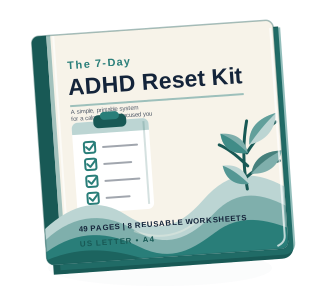
Want the short version? The 7-Day ADHD Reset Kit
Seven days, one small step each day. A printable PDF kit for adults who want their week to feel less like a fight.
PRINTABLE PDF KIT · LIMITED TIME OFFER
What Helps in the Moment
Begin by delaying any action that is hard to undo. Do not send the draft yet. Do not make the final choice while everything feels urgent. Save your place and step away if the setting allows.
Use plain words for the immediate facts. “The plan changed.” “I felt dismissed.” “I need time before I answer.” Specific language is easier to work with than a broad story about what always happens.
- Pause the action. Save the reply or ask to return to the conversation.
- Reduce the input. Move away from noise, screens or extra discussion.
- Name the facts. Write what happened without guessing motives.
- Choose the next safe action. Wait, ask a question or make a short note.
If words are hard, use a holding sentence. Say that you need time to think and will return later. A pause is not avoidance when you keep the return point clear.
What Helps Afterwards
When the feeling settles, look at what still needs attention. Perhaps nothing needs fixing. Perhaps a message needs clarity, an apology is due, or a plan needs to change.
Keep the repair close to the event. Name what you did, what effect it had and what you will do now. Avoid turning a difficult moment into a judgment about your whole character.
Repair the impact without arguing with your feelings. You can believe the situation was hard and still correct a rushed reply. Both things can be true.
Then close the loop. Send the calmer note, update the plan or write the next conversation point. The aim is not endless replay. It is a useful repair and a clearer restart.
Build the Skill Slowly
Steadier responses grow through repeated small pauses. Pick a common setting, such as email, meetings or changes at home. Decide what your pause will look like before the hard moment arrives.
Make that pause easy to remember. Keep a draft rule beside your inbox. Add open space after demanding meetings. Use a short note that says “facts before reply.” Prepare the cue while you are calm.
Review what helped without scoring the day. A shorter argument, an unsent draft or a clearer repair still counts as useful change. For routines that survive disruption, see ADHD routines. For wider everyday context, read ADHD characteristics.
Make an Everyday Plan
A practical plan can stay brief. Name the setting that tends to run hot. Choose where you can pause. Write a holding sentence and decide how you will return.
Share the plan with people involved when that feels useful. A colleague or family member can understand that a delayed answer is part of staying clear, not a sign that the issue is being ignored.
Keep the plan visible where the moment happens. A note buried in a journal cannot help at the inbox. The adult help guide describes broader practical support without choosing for you.
Sources for the general information on this page: CDC (cdc.gov), NIH/NIMH (nimh.nih.gov), Mayo Clinic (mayoclinic.org). Educational information only, not medical advice.